Supporting English Language Learners
Through scaffolding, home language, and vocabulary instruction. This module gathers my ELL/MLL essay and the cohort outline for using knowledge of language acquisition to support students.
Course Overview
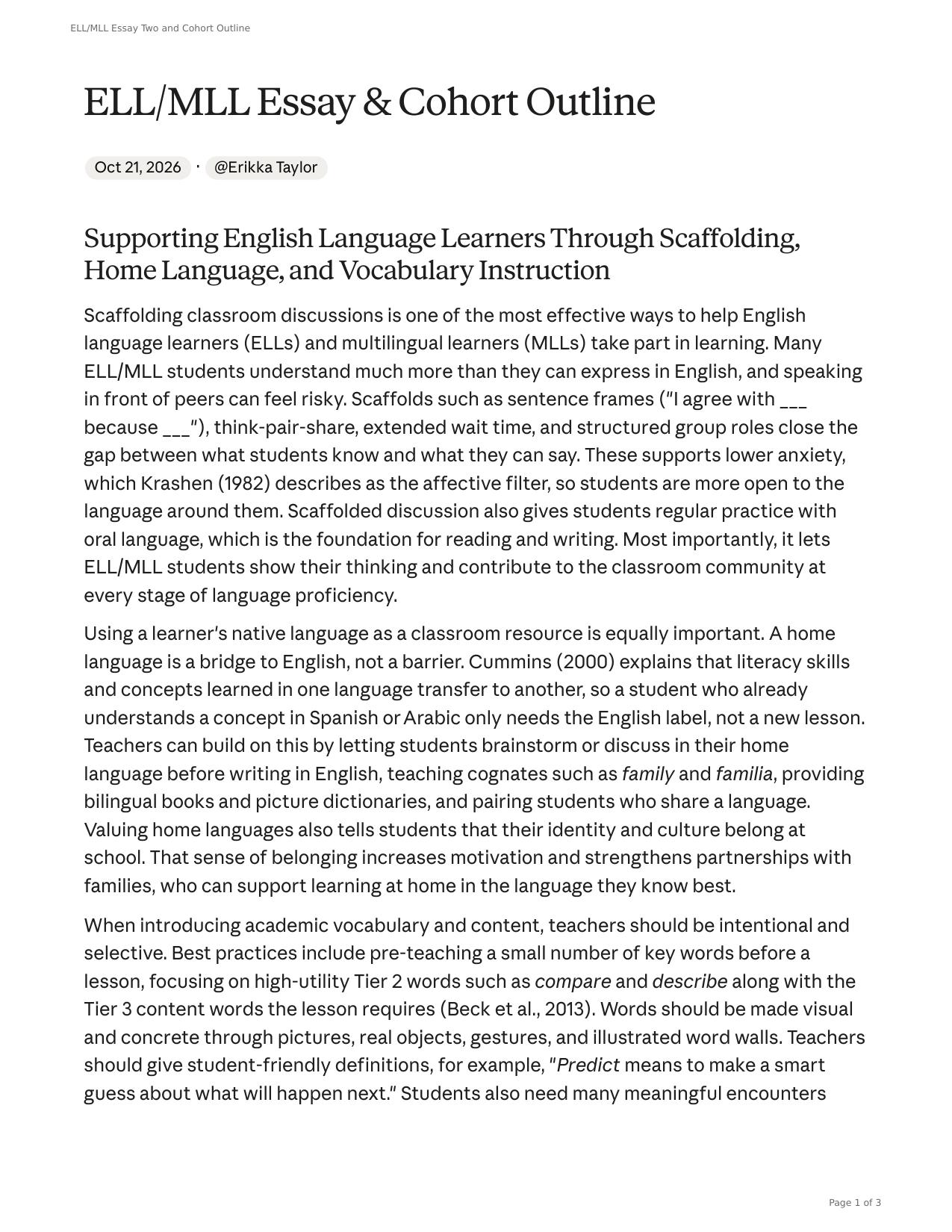
Module 3 asks me to think carefully about how multilingual learners actually acquire English and what a classroom can do to help. My essay argues that three practices carry most of the weight: scaffolding discussions so students can take part, treating a home language as a resource rather than something to leave at the door, and teaching academic vocabulary with real intention. Each of these ideas now shows up in how I plan lessons, choose materials, and talk with families.
Artifacts & Evidence
ELL/MLL Essay & Cohort Outline
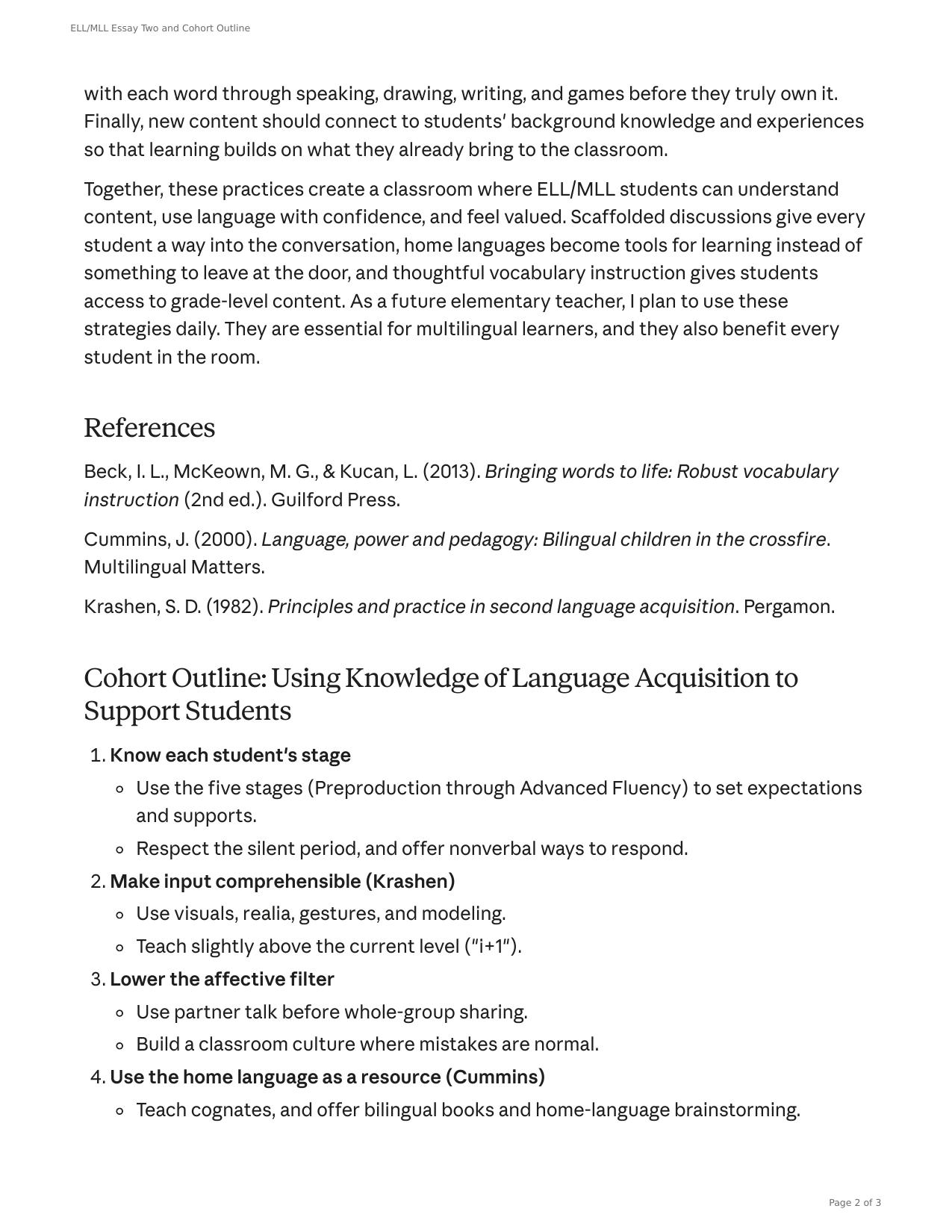
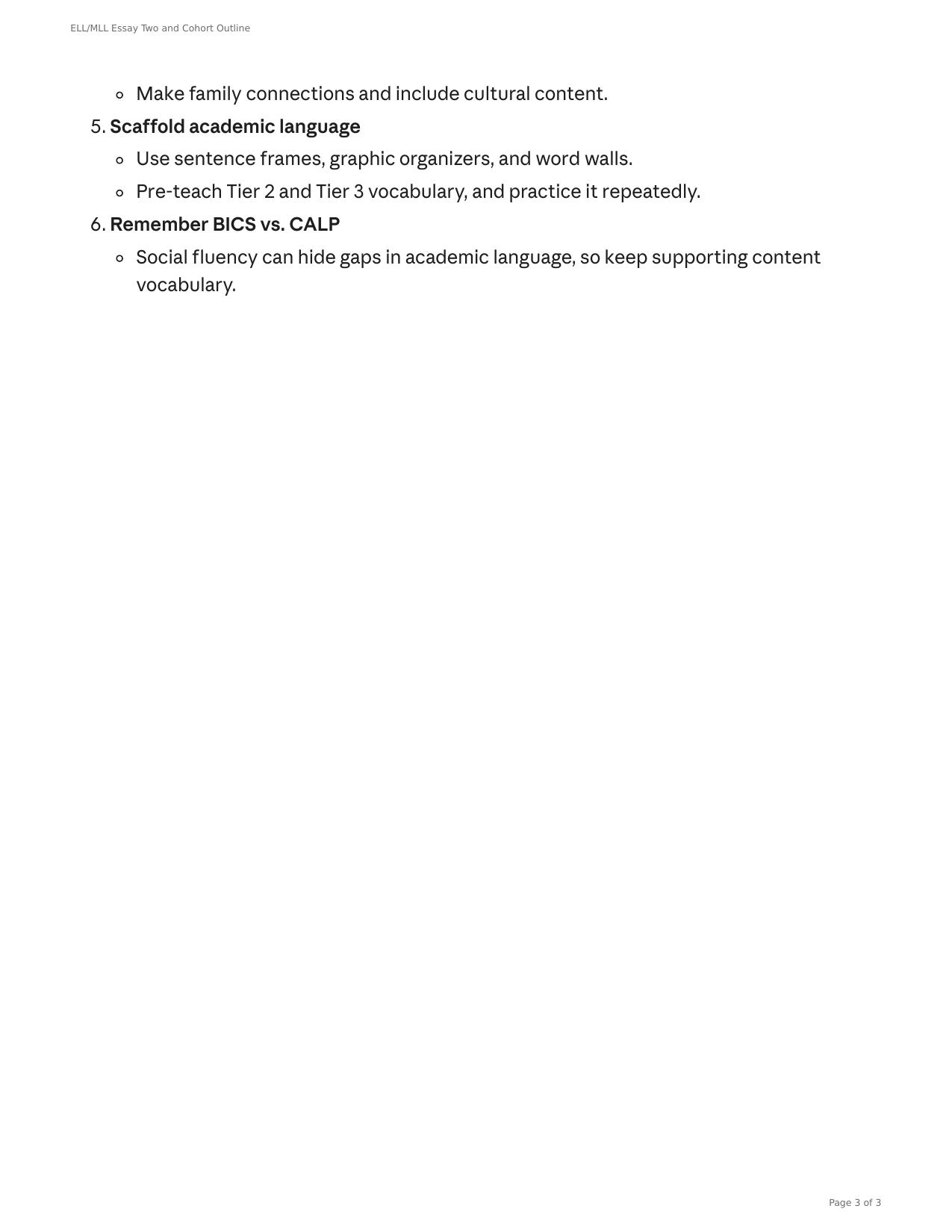
My complete essay with the cohort outline and reference list, uploaded October 21, 2026. Read all three pages below, or download the original PDF.
From the essay
"Together, these practices create a classroom where ELL/MLL students can understand content, use language with confidence, and feel valued. Scaffoled discussions give every student a way into the conversation, home languages become tools for learning instead of something to leave at the door, and thoughtful vocabulary instruction gives students access to grade-level content. As a future elementary teacher, I plan to use these strategies daily. They are essential for multilingual learners, and they also benefit every student in the room."
Cohort Outline: Using Knowledge of Language Acquisition to Support Students
- Use the five stages (Preproduction through Advanced Fluency) to set expectations and supports.
- Respect the silent period, and offer nonverbal ways to respond.
- Use visuals, realia, gestures, and modeling.
- Teach slightly above the current level ("i+1").
- Use partner talk before whole-group sharing.
- Build a classroom culture where mistakes are normal.
- Teach cognates, and offer bilingual books and home-language brainstorming.
- Make family connections and include cultural content.
- Use sentence frames, graphic organizers, and word walls.
- Pre-teach Tier 2 and Tier 3 vocabulary, and practice it repeatedly.
- Social fluency can hide gaps in academic language, so keep supporting content vocabulary.
References
- Beck, I. L., McKeown, M. G., & Kucan, L. (2013). Bringing words to life: Robust vocabulary instruction (2nd ed.). Guilford Press.
- Cummins, J. (2000). Language, power and pedagogy: Bilingual children in the crossfire. Multilingual Matters.
- Krashen, S. D. (1982). Principles and practice in second language acquisition. Pergamon.